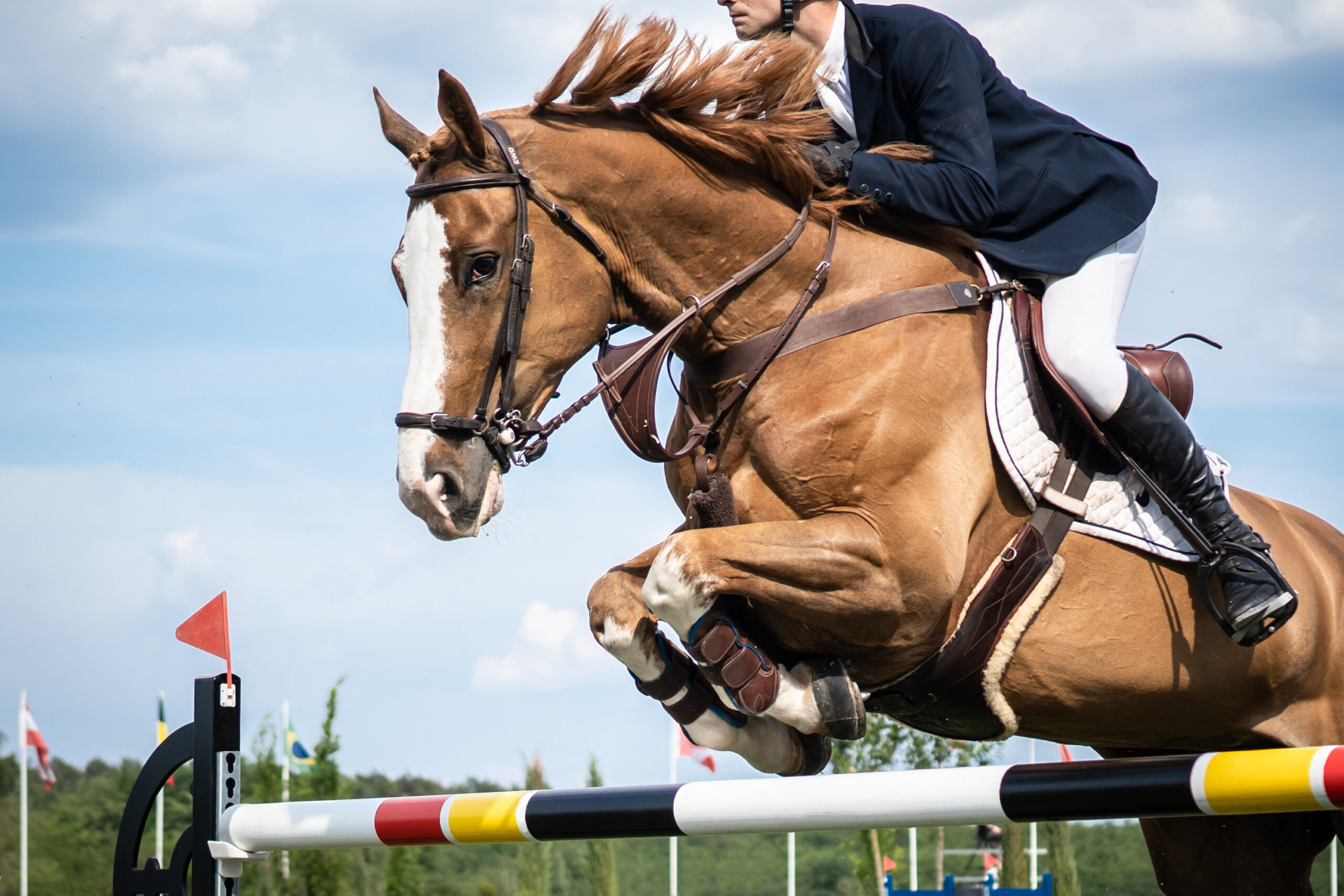
Muscle-broken or PSSM?
Muscle weakness is also called tying- up or Monday sickness. A horse that is muscle-tired may suddenly start walking with a short stride when riding or will not move at all and stiffens up. With muscle sickness the muscle metabolism is disturbed, this causes extreme acidification to occur in the muscles. This happens especially in the back, lumbar and cruciate muscles. This is very painful for the horse.
How can the horse become muscle-bound?
Several causes can play a role in muscle cramps. For example, electrolyte imbalance due to excessive sweating, selenium and vitamin E deficiency and metabolic diseases can cause muscle cramps.
However, the most common cause of muscle fatigue is an excess of concentrate relative to what is being burned. Muscles need energy to move, and it stands to reason that the amount of energy required depends on the intensity of exercise. Power feeds are often rich in carbohydrates, which after digestion enter the blood primarily as glucose. Glucose can be used by the horse as a "quick" source of energy, but when not needed, it will be temporarily stored as glycogen in the liver and muscles. This builds up a supply of quick energy, so to speak. Then, when the horse does have to make an effort, this fast energy is drawn upon first. Under normal circumstances, energy combustion uses oxygen, which is also present in the muscles. However, the combustion of glucose is very fast, actually too fast and the body cannot release the right amount of oxygen required for this combustion in time. This causes a so-called anaerobic metabolism, without oxygen, which results in the production of lactic acid, a waste product that the body must recycle or get rid of. When there is too much lactic acid, this disposal is insufficient and remains in the muscles, where the lactic acid acid acidifies the muscles. This makes the muscles stiff and rigid.
How do you tell when a horse is muscle-tired?
Muscle weakness comes in different degrees:
Light
With mild muscle weakness, the horse becomes stiff in the hindquarters, this occurs shortly after riding. The horse will stand with a slightly arched back, often standing somewhat stretched. The horse prefers not to move. Blood tests would show a slight increase in muscle enzymes.
Moderate
In moderate muscle tremor, the acidification already occurs while riding. The horse will walk with a stiff, greatly shortened stride and will prefer not to walk at all. The muscles in the hindquarters may twitch, become stiff and painful. The horse starts to sweat excessively, even though the training is over. The urine may turn brown; this may indicate the presence of myoglobin. This is a protein in muscles and is released when muscle tissue is damaged. Myoglobin is very harmful to the kidneys. Blood tests show a marked increase in muscle enzymes.
Heavy
In severe muscle tremor, the horse starts sweating excessively fairly shortly after beginning exercise and begins to move stiffly. Then refuses to walk and wants to lie down. The horse becomes anxious, heart and breathing frequency goes up and the horse breathes with wide nostrils. The urine is stained brown. Blood tests show a sharp increase in muscle enzymes.
What role nutrition plays in muscle weakness
Horses prone to muscle weakness are recommended a ration low in starch and sugars. When starch and sugars are burned, lactic acid is formed. To still add extra energy to the ration, it is best to use vegetable oils. Fat is a good source of energy and this combustion is slower, which reduces the formation of lactic acid.
The basis of the ration should be roughage, at least 50-60% of the energy should be obtained from roughage. Concentrated feed is only supplemental. Supplements with vitamin E, C and selenium can be used to better dispose of muscle waste, prevent acidification and they help the muscles recover. Vitamin E, selenium and vitamin C are antioxidants and promote the removal of formed lactic acid. In addition, they prevent free radical damage to cells. For the utilization of vitamin E, selenium is important. Together, they provide muscle recovery. Research has shown that selenium deficiency requires more vitamin E and vice versa.
HorseAdds Muscle Recovery is a suitable supplement for horses that are muscle-tired or prone to it. It contains high levels of vitamin E and is combined with vitamin C, Selenium and MSM. The study by Marañon et al, 2008 examined the effect of MSM in combination with vitamin C in horses. This showed that MSM combined with vitamin C has a protective effect on muscles after strenuous exercise. In addition, HorseAdds Muscle Recovery contains essential amino acids to promote muscle building. Vitamin B2 and B6 are added to allow the body to make optimal use of these amino acids.
PSSM, polysaccharide storage myopathy
A second disorder of the muscles is PSSM. This is a muscle disorder in which sugar molecules accumulate in muscle cells. This leads to muscle problems. The symptoms are varied; horses walk stiffly or do not want to walk at all, excessive sweating, muscle tremors, muscle loss and the urine turns dark brown. A blood test shows a sharp increase in muscle enzymes, especially CK (creatine kinase) and LDH (Lactate dehydrogenase) are strongly elevated. The symptoms of PSSM are similar to a horse that is muscle bound, but not every horse that is muscle bound has PSSM. A muscle biopsy of a horse with PSSM shows an abnormal accumulation of sugar molecules in the muscle cells. This is not specific to horses with muscle paralysis.
There are two types of PSSM: PSSM1 and PSSM2.
PSSM1
In PSSM 1, the cause is genetic and inherited. The abnormal accumulation of sugar molecules in the muscle cells is caused by a specific gene, "glycogen synthase 1 gene (GYS1)." This is most commonly seen in Quarter Horses, Paint Horses and various draft horse breeds.
PSSM2
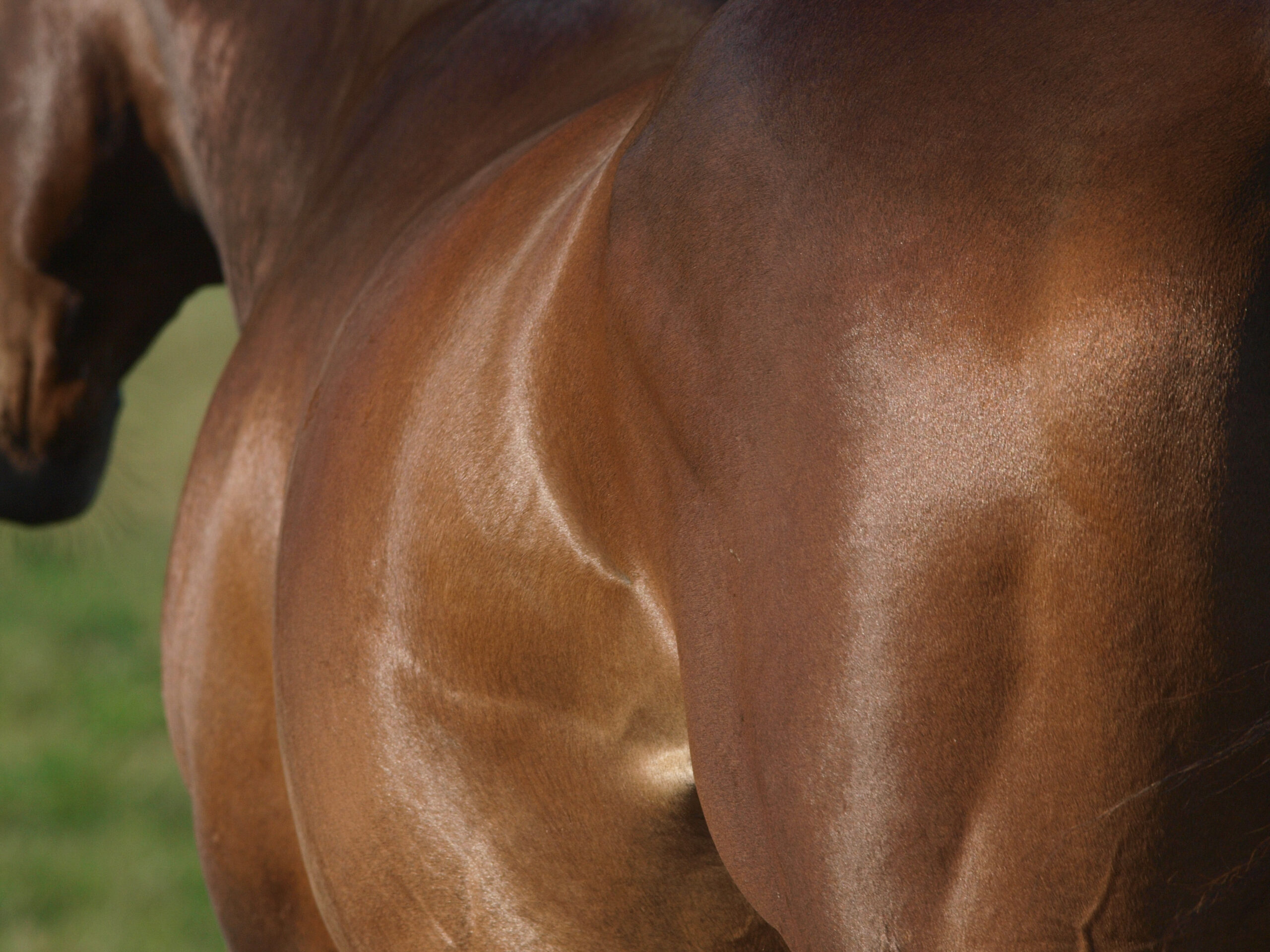
The symptoms of PSSM 2 are very similar to the symptoms of PSSM 1, only there is no mention of the heritable transmissible gene "GYS1" or the specific accumulation of sugar molecules in the muscle cells. PSSM2 is more like a collective name for several gene mutations and is also hereditarily transmissible. Usually the symptoms of PSSM 2 manifest in adult horses and it can manifest itself clearly in muscle damage and muscle breakdown, irregular gait and lameness. The muscle damage and muscle breakdown can take a typically visible form in some horses, namely holes in the musculature. This is particularly visible on the hindquarters, bow and shoulders.
Many horses also have an abnormal gait, such as rope walking. This involves putting the legs in front of each other instead of side by side. Frequent stumbling, inability to broaden or understride, cantering across or cantering with the hind legs level are also all characteristics of PSSM 2.
The cause of PSSM2 is still under debate. Research did show that PSSM 2 is not a sugar storage problem, but a chronic muscle breakdown problem. Studies show that several genes are involved and are called P2, P3, P4 and PX. However, new genes are still being discovered that are associated with PSSM 2. Want more information about the genes of PSSM 2 and how it can be tested? Then check out:
- http://equiseq.com/learning_center/health/polysaccharide-storage-myopathy-pssm#polysaccharide-storage-myopathy-type-2
- https://cvm.msu.edu/research/faculty-research/comparative-medical-genetics/valberg-laboratory/type-2-polysaccharide-storage-myopathy
How to feed a horse with PSSM
PSSM 1 is een suikeropslag probleem, belangrijk is een rantsoen met zo min mogelijk zetmeel en suikers. Vet is een goede keuze voor een alternatieve energie bron. Uit onderzoek is gebleken dat een rantsoen met een hoger vetgehalte (>12%) en lager zetmeelgehalte (<5%) een positief effect heeft op CK waarde in het bloed na een training. Deze is bij paarden met PSSM1 vaak sterk verhoogd. Een rantsoen met een hoger vetgehalte en lager zetmeel gehalte verlaagt de kans op afbraak van spierweefsel.
Vitamin E, C and Selenium
With a ration rich in fat, the need for vitamin E increases. For every milliliter of added oil, at least 1 IU of vitamin E should be added to the ration. In addition, extra vitamin E is important for horses with PSSM to support the muscles. Vitamin E is a strong antioxidant and has a beneficial effect on muscle metabolism and muscle recovery. It protects the body against the negative effects of free radicals. Vitamin E works together with Selenium. Vitamin C is also a strong antioxidant. As previously described for muscle failure, HorseAdds Muscle Recovery is a suitable supplement to support horses with muscle problems.
Protein
In PSSM 2, there is no sugar storage problem, but there is chronic muscle breakdown. Horses with PSSM 2 have a chronic protein deficiency, this is because the body is constantly working on muscle repair and muscle building. These horses benefit from a high dose of protein and high quality amino acids, especially Lysine, Threonine and Methionine. HorseAdds Muscle Build is a good supplement to support horses with PSSM 2. Our HorseAdds Muscle Build feeds these amino acids in an optimal amino acid profile to promote muscle building in your horse.
It is precisely the amino acid profile of a supplement for muscles that is important. You can add so much of one of several amino acids, but if there is less of another essential amino acid, your horse's body cannot process the rest properly. Through research, we know that your horse's muscle tissue contains the amino acids lysine, methionine and threonine in an estimated ratio of 10: 3: 6. Based on this knowledge, we formulated HorseAdds Muscle Build. Added to the supplement is vitamin B6, which contributes to protein metabolism.
In addition, you can choose protein-rich feeds, such as soybean meal. This is rich in high-quality protein and amino acids.