Allergic reactions in horses: what can you do to support your horse?
Allergic reactions in horses can manifest themselves in a variety of ways, such as itching, skin irritation or other visible symptoms. But what exactly happens in your horse's body during such an allergic reaction? It all starts with the immune system, which reacts to allergens in the environment. This releases histamine, which can lead to the visible or palpable symptoms we associate with an allergic reaction. Histamine plays an important role in the body, but too much of it can cause problems. In addition to external factors, such as pollen or insect bites, nutrition can also have a surprisingly large impact on your horse's histamine levels and overall health. In this article, we discuss how you can support your horse with allergic reactions and what role nutrition, minerals and supplements can play.
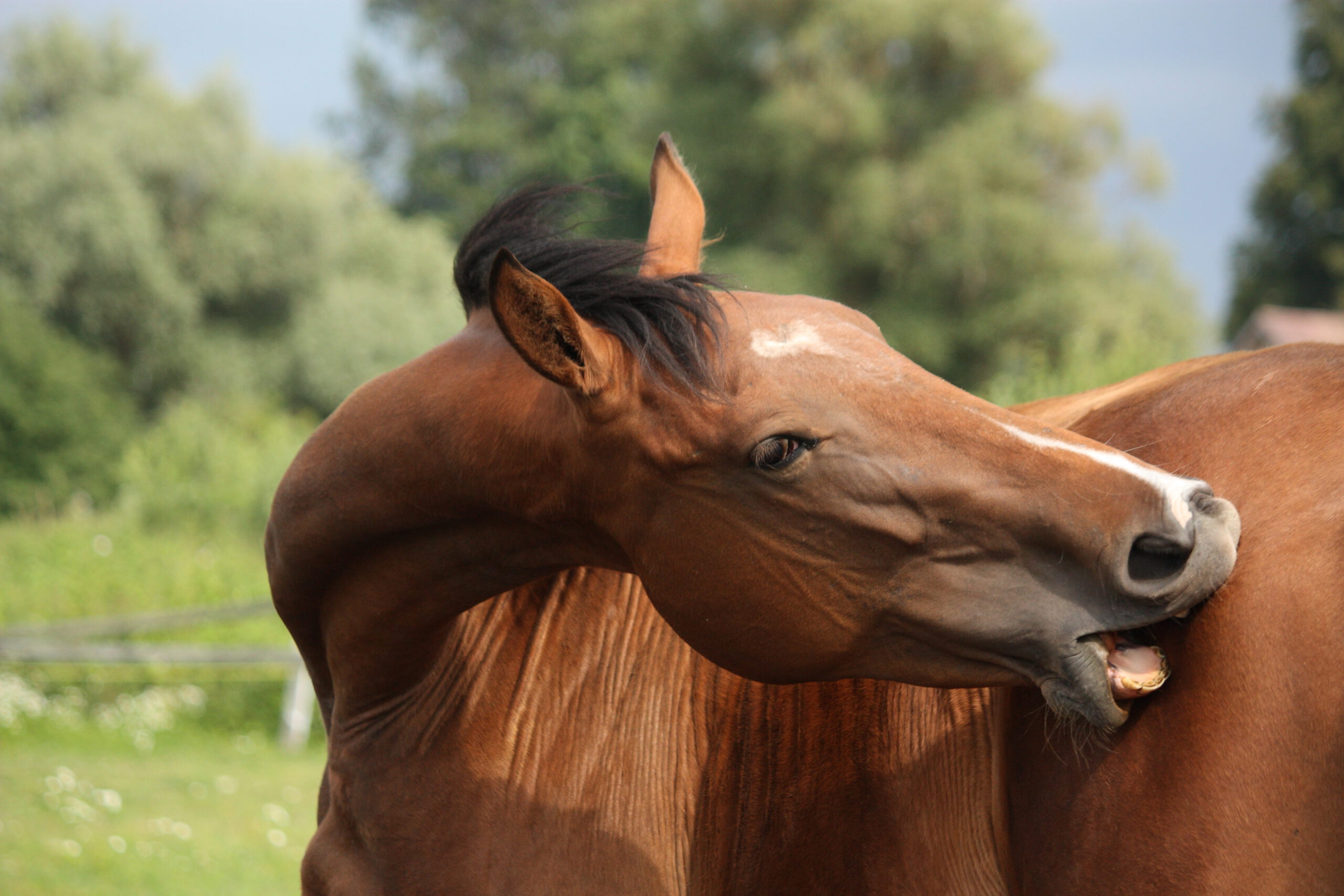
To begin with, what happens in brief in an allergic reaction? Allergic symptoms are caused by allergens stimulating the immune system. Histamine is released as antibodies come into contact with mast cells containing histamine. The histamine then enters the blood, mucous membranes and skin. Here the histamine causes the visible or palpable allergic symptoms. Histamine is an important substance for the body; for example, it triggers the immune system to act when a pathogen invades. It only becomes a problem when there is too much of it in the body. If this threshold is exceeded, the horse develops symptoms. At first, it may seem that nutrition has little or nothing to do with this. However, if you look further, nutrition does have an important role.
"Nutrition plays an important role in supporting your horse's overall resistance and skin health, which is also important in horses prone to allergic reactions. Provide a balanced ration and consider supplements to best support your horse."
Prevent shortages
To begin with, certain deficiencies of vitamins, minerals and trace elements in the diet can cause resistance to be lower. As a result, inflammatory reactions can occur more easily. Inflammatory reactions increase histamine levels in the body. Fortunately, the body has an answer to this with the enzyme diamino-oxidase (DAO). This enzyme, present in the intestines, ensures that an excess of histamine is broken down. Only ... a deficiency of this can also occur. Sometimes this is due to a genetic defect, which means that too little DAO is made. However, the deficiency can also occur due to an imbalance in the intestinal flora, inflammation of the intestine, or a deficiency of vitamin B6 (an important cofactor for DAO).
Histamine levels are also increased by certain nutrients. For example, protein-rich foods contain more L-histidine, which the body converts to histamine. Histidine is mainly found in protein-rich young plant tissues, such as fresh grass, which contains higher levels of protein especially in spring and fall.
The right elements
In addition, the following trace elements are important in preventing unnecessary symptoms and in maintaining healthy skin:
Zinc
Zinc provides a beautiful, shiny coat and has several functions for good and healthy skin. Zinc is needed in building, regulating skin functions and building skin structure, hooves and hair growth. Zinc helps the body deal with free radicals and protects cells from oxidative stress.
Copper
Copper is important for the immune system, protects cells from oxidative stress and is involved in the decrease of histamine in the body. The lower the copper levels in the body are, the more histamine and therefore more likely to cause allergies.
Iodine
Iodine is not only an important anti oxidative substance which counteracts free radicals, but also inhibits the formation of histamine from histidine. An iodine deficiency thus stimulates the occurrence of allergic symptoms.
Selenium and vitamin E
Selenium acts as an antioxidant in the body and works closely with vitamin E, also a powerful antioxidant. They are important in an optimal immune system and protect cells from oxidative stress.
The importance of healthy gut flora in allergic reactions
The intestines are the engine of the body; this is where all the important nutrients, vitamins, minerals and trace elements from the diet are absorbed. If the intestines do not function optimally and the intestinal flora is out of balance, the important nutrients cannot be absorbed. As a result, the horse develops deficiencies even though its diet may be adequate. In addition, as mentioned earlier, a healthy intestinal flora is necessary for the production of the DAO enzyme.
To keep the intestines as healthy as possible, adequate coarse-stemmed roughage with enough digestible fiber is very important. Want to know more about roughage and the importance of minerals and trace elements? Then read our roughage blogs.
There are also complementary feeds or supplements to support your horse's intestines. Consider soy hulls, these are packed with easily digestible fiber, namely pectin. This is why soy hulls are also called super fibers. Probiotics, yeast is rich in B vitamins, these are needed to keep the intestinal flora healthy. You can also opt for a comprehensive B-complex supplement.
Feed grain-free, low starch and sugar
Horses, prone to itching, often react negatively to feeds high in starch and sugar. Why this is, is not scientifically substantiated and besides, every horse reacts differently to certain feeds. However, we can establish a link between high-starch and high-sugar feeds and intestinal problems. To do this, we need to take a closer look at how digestion works in the horse.
Starch digestion
Most elements of concentrate foods, such as fats, starch and protein are digested in the small intestine. This is done by digestive enzymes, which are produced by the small intestine and pancreas. The starch is broken down into glucose by the enzyme Amylase and this is used as energy. However, the horse can only produce a limited amount of amylase in the pancreas and thus can only break down a limited amount of starch. Excess starch, which cannot be digested in the small intestine, flows through to the large intestine. Alone, starch is no longer digested in the large intestine and this can lead to problems. The starch is fermented by the bacteria in the colon (the intestinal flora), only lactic acid is produced in the process. The acidity in the intestine drops, the result is that the "good" bacteria die and in the process toxins are released which are called endotoxins. These endotoxins then enter the bloodstream. Consequently, the intestinal flora also becomes unbalanced.
Grain-free feeds
Grain-rich feeds are often high in starch and sugars. We can make the connection that too much starch is stressful to the colon, causing the intestinal flora to become unbalanced. This in turn affects nutrient absorption and the overall health of your horse!
Our HorseAdds Balance is 100% grain free, very low in starch and sugars. It contains all major vitamins, minerals and trace elements, formulated entirely on recent forage analyses. In addition, HorseAdds Balance contains the complete Vitamin B complex and supplemental yeast. Want to learn more about our Balancer? Read our blog

Support with Omega fatty acids
Omega 3 and 6 fatty acids perform essential functions in the body; they play an important role in inflammatory reactions. Omega-6 fatty acids are easily ingested by the horse, as they are found in all vegetable oils. They provide a good layer of skin fat. Omega-3 fatty acids are less easily ingested by the horse, they are essential for health, immune system and help support skin and coat condition. Fresh grass is rich in omega-3 fatty acids, but this proportion decreases once it is dried and fed as hay.
The right ratio of Omega-3 and 6 fatty acids is important for the proper balance of certain inflammatory factors that are important for repairing inflammatory reactions. To support your horse with highly sensitive and irritated skin during the summer months, you can give him both Omega-3 fatty acids and omega-6 fatty acids. Spirulina, combined with Flaxseed oil can be effective during this period. Flaxseed oil is rich in Omega-3 fatty acids and Spirulina is rich in the Omega-6 fatty acid Gamma-linolenic acid (GLA). Omega-3 and GLA fatty acids support the skin's healing ability. In addition, Spirulina is rich in antioxidants such as vitamins A, C and E. Recently, we also launched a supplement that supports so-called summer eczema or also called summer itch: HorseAdds Itch Relief.
For additional support, you can also feed flaxseed oil which is combined with natural vitamin E. Vitamin E is a powerful antioxidant, so when extra fats are added to the ration, the need for vitamin E increases. With HorseAdds Natural E Oil, you can feed both in one supplement.
"Flaxseed oil, combined with Spirulina can be supportive for healthy skin"