
Description
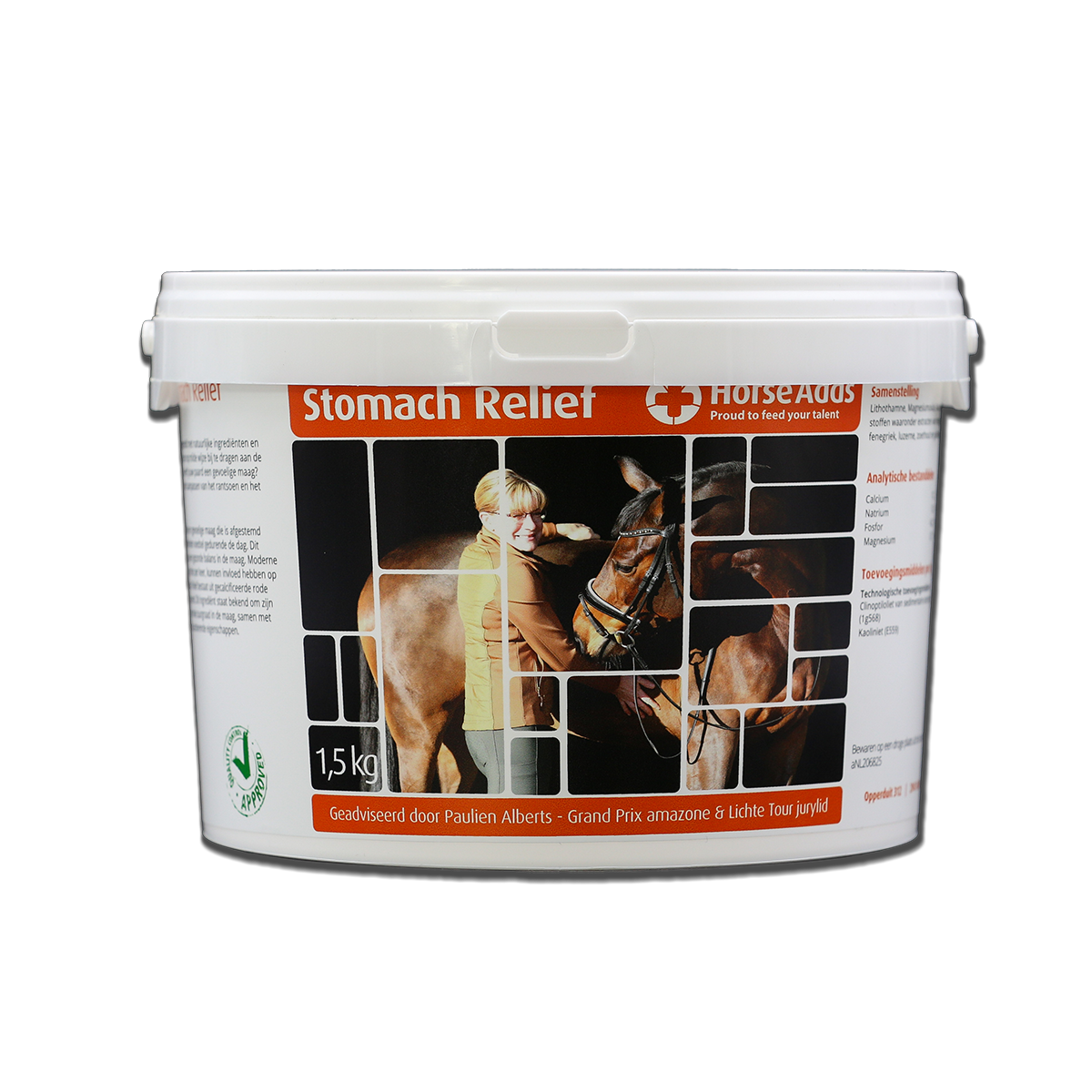
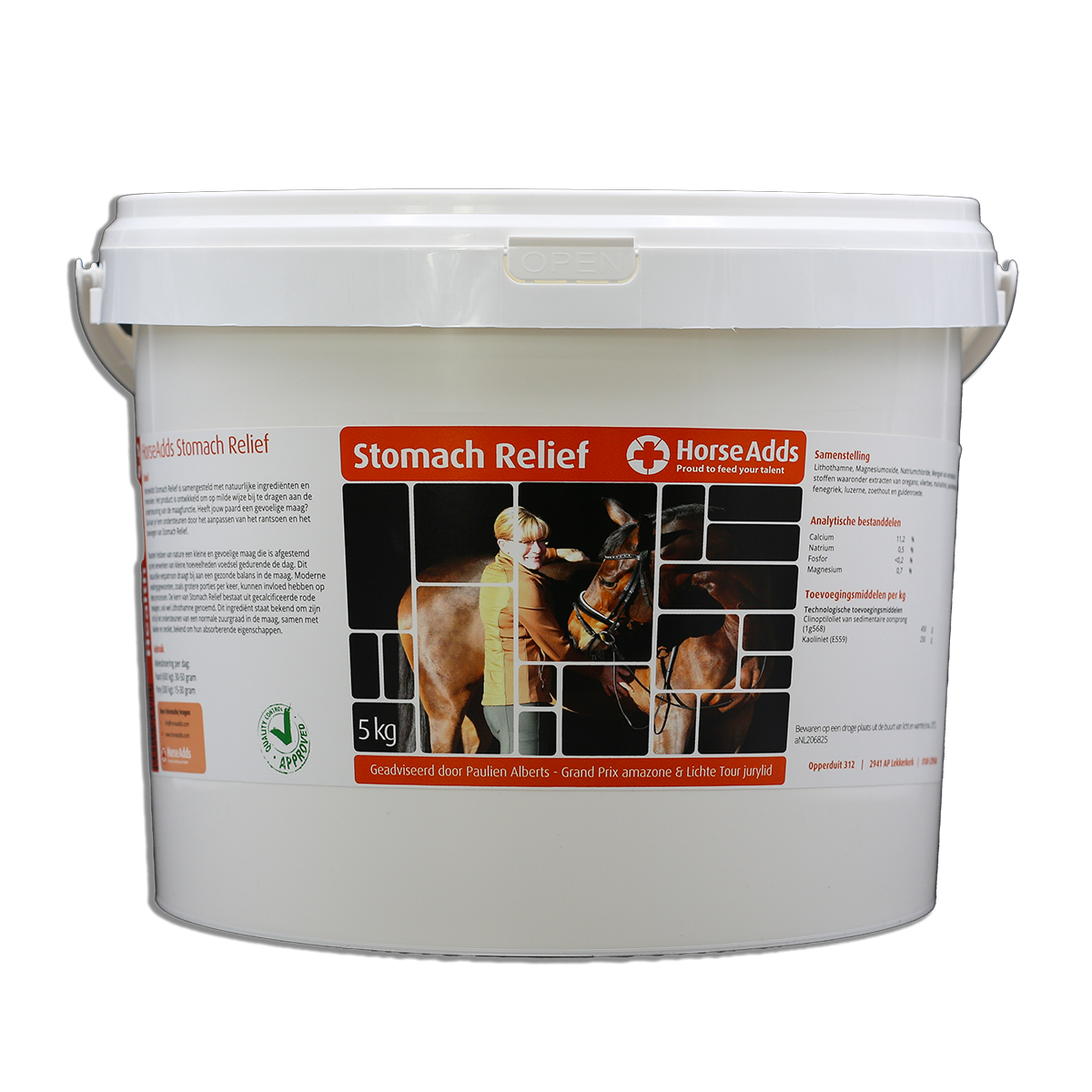
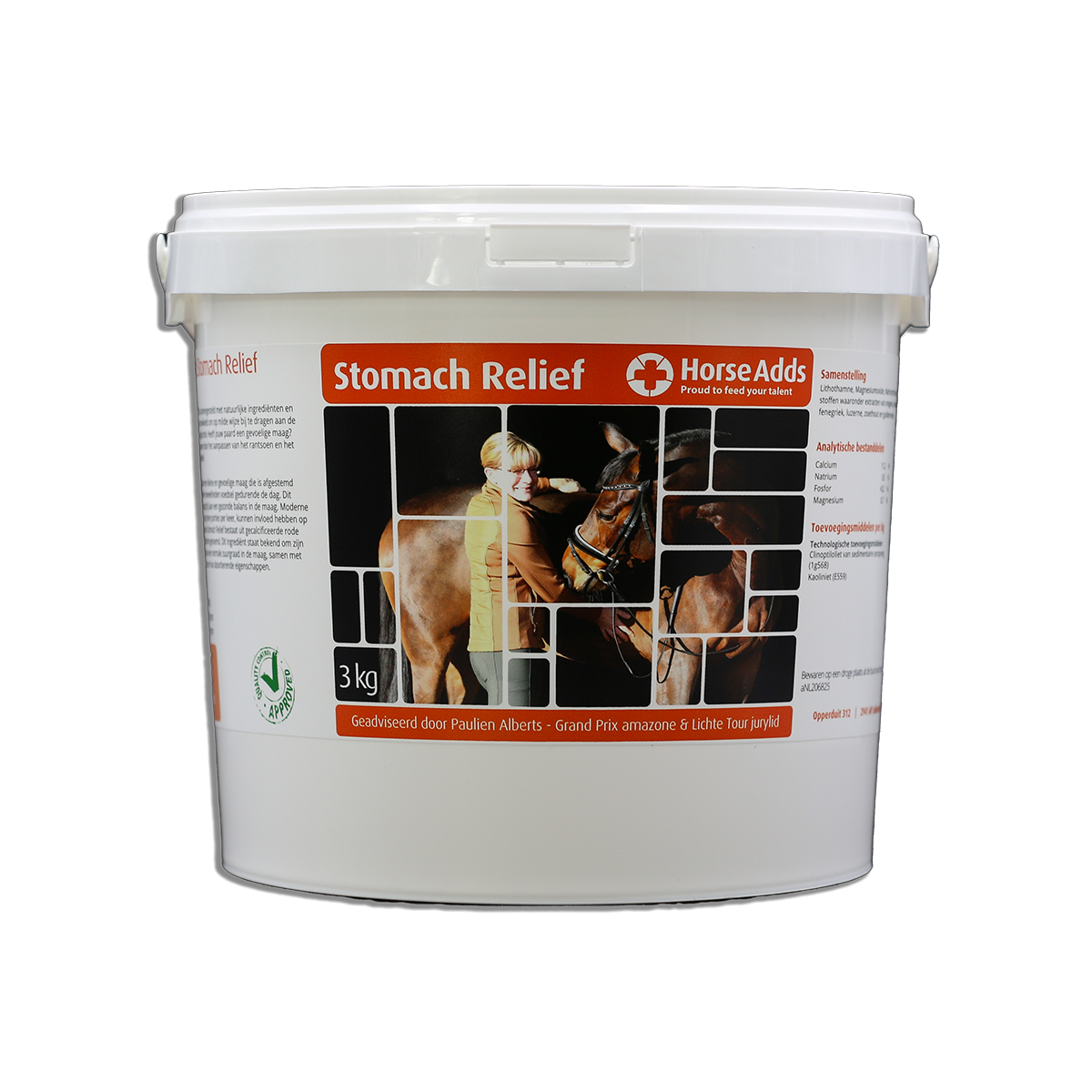
HorseAdds Stomach Relief
In collaboration with Grand Prix rider Paulien Alberts, we are proud to introduce HorseAdds Stomach Relief! This high-quality supplement is formulated with natural ingredients and minerals and designed to complement a varied diet. The product is designed to gently help support the stomach function of horses and is based on an improved, proven recipe. Does your horse have a sensitive stomach? If so, you can support him by adjusting the ration and adding Stomach Relief.
What does HorseAdds Stomach Relief do?
Horses naturally have a small and sensitive stomach that is geared to process small amounts of food throughout the day. This natural eating pattern contributes to a healthy balance in the stomach. Modern eating habits, such as larger portions at a time, can affect these processes. The core of Stomach Relief consists of calcified red marine algae, also known as Lithothamne. This ingredient is known for its role in supporting normal acidity in the stomach, an important aspect of digestion in horses.
In addition to Lithothamne, the product contains kaolin and zeolite. These are traditionally used for their absorbent properties and wide application in animal feed. In addition, the product contains magnesium oxide (MgO) and sodium chloride (NaCl), which are essential minerals that can naturally play a role in supporting various bodily functions. HorseAdds Stomach Relief can be a valuable supplement for horses with sensitive stomachs.
In addition, the product contains the following plant extracts: licorice, alfalfa, oregano, elderberry, milk thistle, dandelion, fenugreek, and goldenrod. These are well-known additives that can play a role in a balanced diet. This product provides a natural supplement that fits within a varied diet.
Recognize horse with stomach upset
A horse with stomach discomfort may show several symptoms, but because horses cannot directly indicate that they are experiencing pain or discomfort, it is important to watch for subtle signs. Here are some signs that may indicate stomach discomfort:
Behavioral changes: Some horses may exhibit behaviors that may indicate discomfort. For example, they may appear anxious more quickly or overreact to stimuli, which can be interpreted as skittish behavior. During saddling, some horses may become restless or show signs of discomfort, such as wobbling or defensive reactions when the girth is tightened. In addition, they may sometimes appear more irritable in their handling, become irritable more quickly, or react repulsively to touch, particularly around the abdominal area. It is important to seek the advice of a veterinarian or specialist when such behavior occurs to determine the cause.
Physical changes: Sometimes horses may show signs that indicate possible discomfort or health problems. For example, a horse may remain thin despite adequate feed, which is noticeable by a visible weight loss. At the same time, the abdomen may look bloated or swollen, especially around the flanks. In addition, the coat may show less luster and look dull or unkempt, which may be a subtle signal of an underlying disturbance. Regular yawning is also seen as a possible sign of discomfort, such as in the stomach area. Finally, the horse may react sensitively to touch, particularly around the abdomen or flanks, which deserves extra attention.
Stall behavior changes: Some horses exhibit behaviors that may indicate discomfort or stress. For example, a horse may become restless and move around a lot or turn constantly in the stall. In addition, behaviors such as crib biting or air sucking may occur, sometimes associated with inner tension or a disturbance in well-being. In weaving, the horse repeatedly moves from one leg to the other, which may indicate nervousness or frustration. In more severe cases, a horse may throw itself against walls, which may be a response to severe pain or discomfort.
Horses may further sometimes show subtle signs of discomfort, such as decreased appetite. This may mean that the horse is eating less than usual or selecting specific feed. Changes in the manure, ranging from dry, hard manure to diarrhea, can also be an indication that something is wrong. In addition, the horse may appear less energetic or even lethargic and apathetic. This may indicate a general change in the horse's well-being.
Do you have questions about how this product works? If so, please contact Paulien Alberts via WhatsApp.