Forage || Trace elements
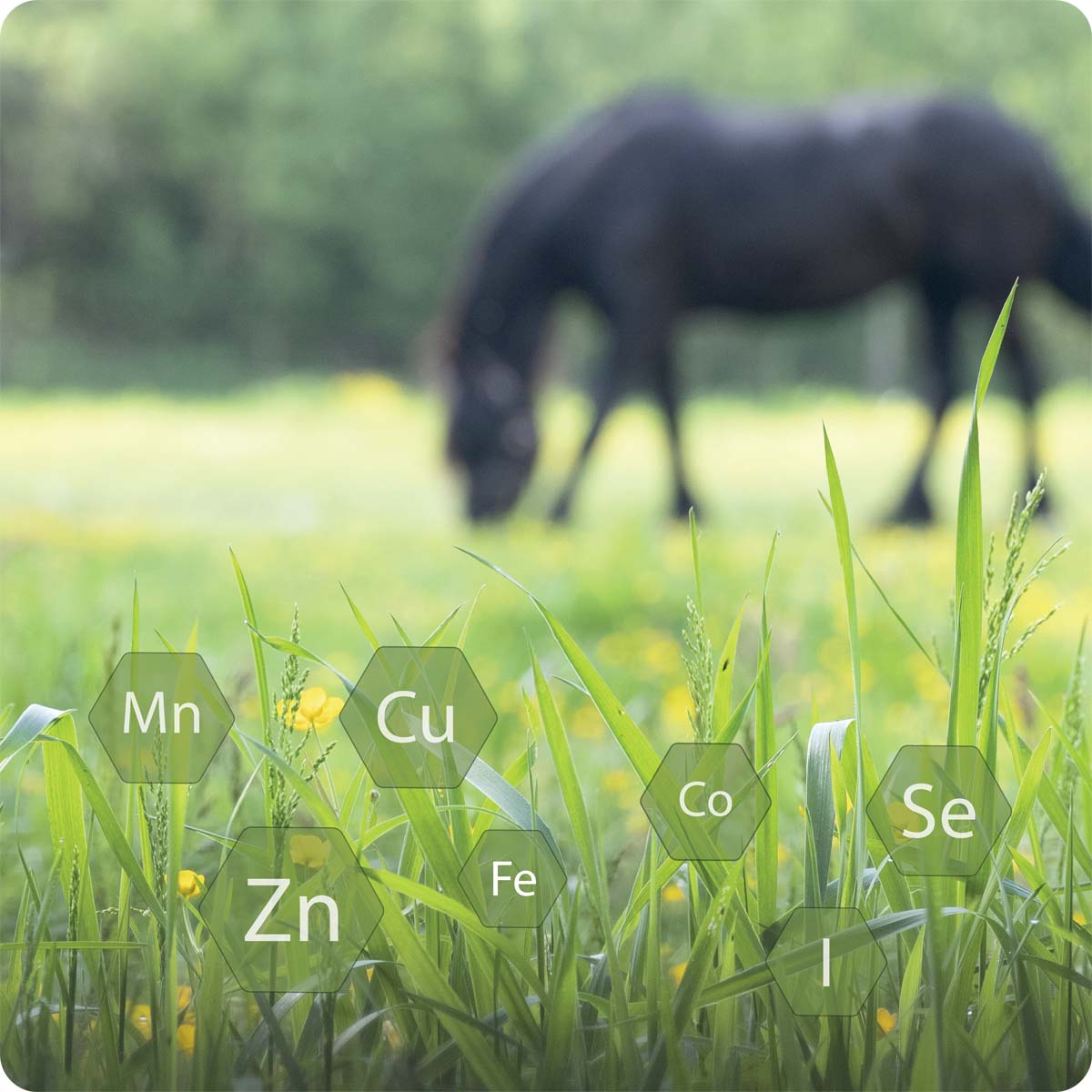
In this blog, we take a comprehensive look at trace elements in forage. On a comprehensive forage analysis, the following trace elements are analyzed:
- Manganese
- Zinc
- Iron
- Copper
- Iodine
- Cobalt
- Selenium
Manganese:
The very first trace element mentioned on a forage analysis is manganese. Manganese is important for skeletal strength, cartilage and bone formation. Manganese is also good for the functioning of the sexual organs, blood clotting and carbohydrate and fat metabolism. In addition, manganese is essential for conversion of carbohydrates and proteins. Normally, horses get enough manganese with their diet.
An excess rarely occurs, manganese deficiency manifests itself in leg deformity, lameness and poor coordination in young horses, movement disorders and fertility problems. Fertility problems manifest themselves in an absent or highly irregular cycle and degeneration of the testes. With a manganese deficiency, more males are born than females.
Manganese has interactions with calcium and iron. High levels of calcium and iron can interfere with manganese absorption, increasing manganese requirements. The daily requirement is 104-130 mg per 100 kg of body weight.
"Did you know that with a Manganese deficiency in the mare, the chances of having a colt are higher?"
Zinc:
The highest concentrations of zinc are found in the choroid and iris of the eye and, in stallions, in the prostate. In addition, the skin, liver, bone and muscle tissue also contain a relatively high concentration of zinc. Low concentrations are found in the blood, milk, lungs and brain. Zinc provides a beautiful, shiny coat, it has several functions for good and healthy skin. Zinc is required in building, regulating skin functions and building skin structure, hooves and hair growth. In addition, zinc is also important for the development of a good immune system, such as the healing of wounds and defense against infections. In stallions, zinc is needed for sperm production. It ensures proper sperm motility, or sperm motility. In addition, zinc is needed to maintain testosterone levels in the blood.
A zinc deficiency can manifest itself through skin problems such as mug and summer eczema, a dull coat, problems with shedding, poor hoof quality and reduced resistance.
The daily requirement is 104-130 mg per 100 kg of body weight. Zinc absorption depends on the zinc status of the horse's body and is usually somewhere between 5 and 15%. In addition, zinc interacts with iron, manganese and copper. The ratio of these is important for proper absorption. An optimal ratio for horses is iron 4- copper 1- zinc 3- manganese 3.

Iron:
Iron provides electron transport and oxygen transport. Iron is a component of heme, which is a building block of hemoglobin and myoglobin (component of red blood cells). These ensure that muscles receive sufficient oxygen; iron is also involved in the production of thyroid hormone.
Iron deficiency is not common in horses, normally there is enough in the diet. But a deficiency can lead to anemia and loss of performance. An optimal ratio for horses is iron 4- copper 1- zinc 3- manganese 3.
However, an excess of iron is bad for the body and causes the formation of free radicals. Iron is regularly on the high side in roughage in the Netherlands. However, not all iron from food is absorbed by the horse's body, so the consequences of iron excess from just roughage are not so common. In the case of high iron levels in drinking water, iron intoxications have occasionally occurred, so this is always a concern when offering ground or surface water. Young foals are also susceptible to iron excess. An overdose of iron can lead to reduced absorption of copper, manganese and zinc.
The daily requirement is 104-163 per 100 kg of body weight.
Copper:
The largest copper supply in the body is found in the liver, joints, muscles and skin. Copper is involved in bone and cartilage growth, plays a role in building red blood cells and is important for the immune system. Furthermore, copper is required to convert iron into hemoglobin in the body and provides protein synthesis for tendons and cartilage. Copper absorption from food is highly dependent on intestinal health, which is why we often see low copper levels after a worm infestation.
Copper deficiency in the body creeps in slowly. When there is a dietary deficiency, the body first draws on the supply of copper in the liver to continue functioning. However, this can cause the horse to become lethargic and to go through coat changes with difficulty. With consumption of copper from the skin, coat discoloration and yellowing of the gums may be observed. With prolonged copper deficiency, liver damage, osteoporosis and osteoarthritis may occur. Anemia in horses can also be a result of copper deficiency. This is because copper plays a role in building red blood cells.
What is often missed is that allergic symptoms, such as hay fever and summer eczema, can also be a result of copper deficiency. This is because copper causes a decrease in histamine. So little copper in the body means more histamine and thus more risk of allergies. Copper deficiency can even result in thrush in the hooves.
Of course, it is not wise to supplement copper solely on these symptoms. In fact, an excess of copper is at least as bad as a deficiency and can lead to liver damage, digestive upset, anemia and drowsiness.
Copper has interactions with many other minerals such as molybdenum, sulfur, zinc, selenium and iron. The daily allowance is 23-33 mg per 100 kg of body weight. Too high gift of iron and also of calcium inhibit the absorption of copper. The higher the iron content in the diet, the higher the copper levels in the diet should also be.
"Excessive levels of Iron in forage can have adverse effects on the absorption of Manganese, Zinc and Copper."
Iodine:
Iodine is an essential trace element that plays an important role, especially in the thyroid gland, in the production of thyroid hormones, which regulate metabolism. Thyroid hormones are essential for normal growth and development of bones, muscles and nervous tissue. They also play an important role in energy consumption, fat burning and regulation of heart rate and blood pressure. Thyroid hormone (thyroid hormone) stimulates the uptake of glucose (energy) from the gastrointestinal tract and accelerates its use in muscles and adipose tissue. In the process, this hormone stimulates the conversion of glycogen to glucose. Iodine is necessary for healthy hormone balance, growth and protects the body from the harmful effects of heavy metals and radioactive radiation. The daily requirement of iodine is 0.5 to 0.7 mg per 100 kg of body weight.
Damage caused by iodine deficiency results from a deficiency of thyroid hormones. Deficiency can manifest itself in a dull and rough coat. The shedding process may be slower or hair loss may occur. Deficiency in foals may manifest as enlarged thyroid, weakness, persistent hypothermia, respiratory distress, OCD, coarse hair, slow shedding, lethargy and high neonatal mortality. In addition, there is a lowering of resistance, making infectious diseases and respiratory infections more likely to take hold. In mares, iodine deficiency can lead to an abnormal cycle and reduced display of stallionhood.
An excess of iodine can lead to stillbirths, hair loss, lethargy or fat gain. In mares, this excess, and we are talking about 300 to 400 mg of iodine per day, can lead to infertility or, in pregnant mares, abortions. If the daily intake in a pregnant mare exceeds 100 mg, the foal may be weak and lethargic, have poor muscle development and bone abnormalities may occur.
Cobalt:
The cecum and colon flora of horses use cobalt in the synthesis of vitamin B12. B12, along with iron and copper, is responsible for the formation and development of red blood cells (corpuscles). The vitamin is also required for proper nervous system function.
Cobalt deficiency is not known in horses, but will show itself through a B12 deficiency. Vitamin B12 deficiency often manifests as anemia. The daily requirement of cobalt is 0.1-0.2 mg per 100 kg of body weight.
Selenium:
Selenium acts as an antioxidant in the body and works closely with vitamin E. Selenium is important for optimal immune function, muscle protection and repair, and fertility.
A mild selenium deficiency can cause increased susceptibility to disease due to decreased resistance, as well as reduced fertility. With severe deficiencies, muscle problems, lethargy, balance problems, poorer feed intake, reduced heart function and in pregnant mares, it affects the growth of foals. The most severe problems are seen in newborn foals and is called White Muscle Disease, which can be fatal.
Excess selenium is rapidly toxic to horses. Symptoms of selenium toxicity include sweating, atactic movements, colic, diarrhea and increased heart and respiratory rate. Horses store selenium in the hooves, mane and tail, and in excess, hoof tears and hair loss can occur as a result.
The daily requirement is 0.3 mg per 100 kg of body weight.
What are the main differences from previous years?
As we told you in Forage Blog || the quality in terms of minerals and trace elements, has deteriorated in recent years. Of the trace elements, Zinc and Selenium in particular are lower than previous years. Zinc has dropped from 37 mg/kg dry matter to 33 mg/kg dry matter. Selenium content has dropped from 87 ug to 74 ug per kg dry matter. Copper content also decreased slightly from 6.2 mg to 5.9 mg.
These are averages, of course, so if you really want to know the quality of your own roughage, have it extensively tested!
"Supplement a forage deficiency with Single Ingredient Supplements from HorseAdds"
HorseAdds supplements to supplement
With concentrates or supplements, deficiencies from roughage can easily be supplemented. HorseAdds offers a variety of supplements to target ration deficiencies, which we call our Single Ingredient Supplements (SIS). Alternatively, you can choose a fully balanced balancer such as our HorseAdds Balance.