Stomach ulcer in your horse? Here's how to support the stomach with stomach problems
Stomach ulcer in your horse? Stomach ulcers and other stomach problems are unfortunately common in horses. The horse's stomach is a sensitive organ. In nature, the horse eats small portions throughout the day and the digestive system is designed to do just that. Nowadays, most horses are kept in a different way, but what has not changed is the digestive system. Therefore, it is important to take into account the natural food intake to avoid problems in the stomach and intestines. What do you need to consider to keep the stomach healthy and how can you help your horse do that?

Prevent stomach ulcer in your horse with healthy gastric acid management
A stomach ulcer in your horse? Compared to other animals, the horse has a small stomach, which acts as a kind of conduit to the intestines. To digest the food in the stomach, stomach acid is produced. Humans produce stomach acid at the time of eating. The saliva produced as we chew signals the stomach to produce stomach acid. However, a horse produces stomach acid 24 hours a day, regardless of when, how often and what quantities it eats. It is important for the horse to be able to eat food in small portions throughout the day, so there is actually always some food in the stomach.
Saliva and food act as a buffer against stomach acid. Food absorbs and neutralizes stomach acid, saliva contains a lot of sodium carbonate and helps neutralize stomach acid. Saliva production is stimulated as the horse chews, primarily on foods high in crude fiber (hay, straw and silage). However, many horses are given large amounts of feed a few times a day. When this runs out, the stomach and stomach acid run out of food to digest, causing the acidity in the stomach to drop. As a result, gastric acidity is thrown out of balance. This can damage the mucosa in the stomach with the risk of your horse developing an ulcer. So it is important to keep stomach acid balanced!
Symptoms of an ulcer in your horse
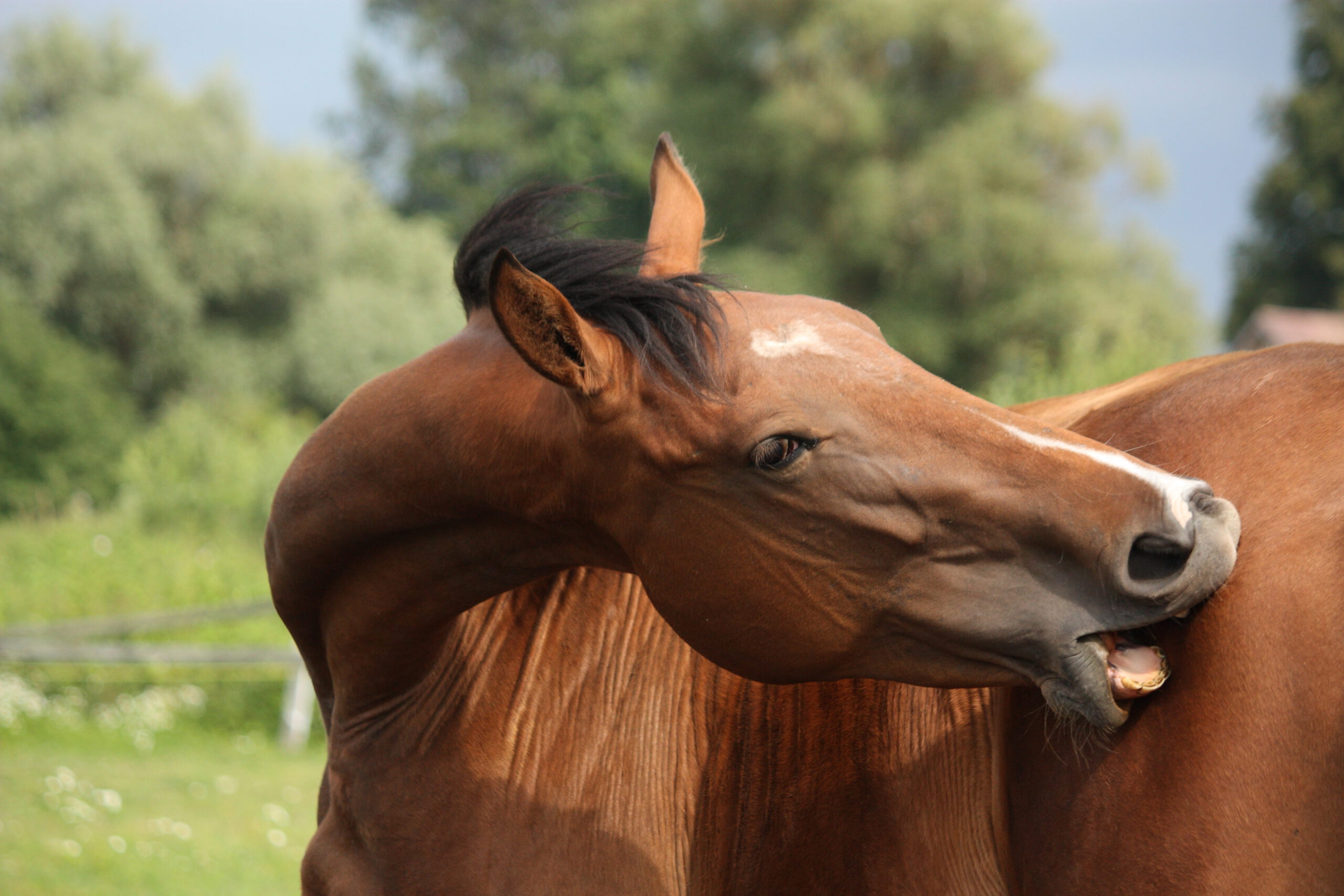
A peptic ulcer can be manifested in various vague symptoms that usually develop gradually. In addition, the symptoms are often very diverse and may indicate other problems, which is why ulcers are often not immediately thought of. There are also many horses with peptic ulcers that show little or no symptoms. Some symptoms by which you can tell that the horse is suffering from its stomach are:
- Reduced appetite,
- Emaciation,
- Dull coat,
- Reduced performance,
- Yawn,
- Teeth grinding,
- Mild colic symptoms,
- Slight stool abnormalities.
Stomach ulcer prevention by supporting a healthy stomach
When a horse has had an ulcer, he or she remains sensitive to it. You want to prevent this, of course, but what can you do to best help your horse?
- Make sure your horse has plenty of roughage available, spread throughout the day. A horse should get at least 1.5% of its body weight in roughage (dry matter). Remember that the horse must also have something to nibble at night, so that the stomach is not empty for too long between feedings. To make sure your horse takes longer to finish its roughage, you can use a slow feeder. If your horse gets too fat, an option is to mix it up with a product such as barley straw or grassfed straw.
- Feed roughage first and then concentrate, and do not feed large amounts of concentrate at a time. Research has shown that fermentation of starches and sugars in the stomach can lead to the further development of gastric ulcers. This is exacerbated by feeding large portions of meals.
- You can choose a muesli instead of kibble. Muesli causes the horse to chew more and thus produce more saliva. Probarn Grain-Free Muesli is a muesli that is very suitable for horses with sensitive stomachs and is low in sugar and starch. Adding a relatively low amount of oil (45 ml) per day, can cause the production of stomach acid to decrease and thus contribute to keeping the stomach healthy.
- If you do want to feed kibble, choose a kibble with a lower starch-sugar content. Starchy foods trigger the production of gastrin. Gastrin is the hormone that stimulates stomach acid production.
- Avoid stress. Stress lowers the blood supply to the stomach, reducing the stomach wall's nourishment and making it more sensitive to stomach acid. Illness, lameness or pain, a strange environment, long periods in the barn, surgeries and transports can create stress and increase the likelihood of an imbalance.
HorseAdds Stomach Sensitive
Add HorseAdds Stomach Sensitive preventatively to the daily ration to support proper acid-base balance in the stomach. Stomach Sensitive is specially formulated for horses with a sensitive stomach and protects the stomach lining. The product consists of calcium-rich red marine algae, also known as Lithothamne. Lithothamne supports the maintenance of normal acidity in the stomach. Stomach Sensitive has a unique, sponge-like structure that increases the contact area in the stomach. It ensures better bioavailability of the minerals. In addition, the organically present calcium and magnesium are highly absorbable and Lithothamne contains a host of other minerals and trace elements such as Zinc, Copper, Iodine, Sodium and Manganese, each with their nutritional benefits.

HorseAdds Stomach Sensitive helps maintain proper acid-base balance of the horse's stomach