Help my horse eats sand!
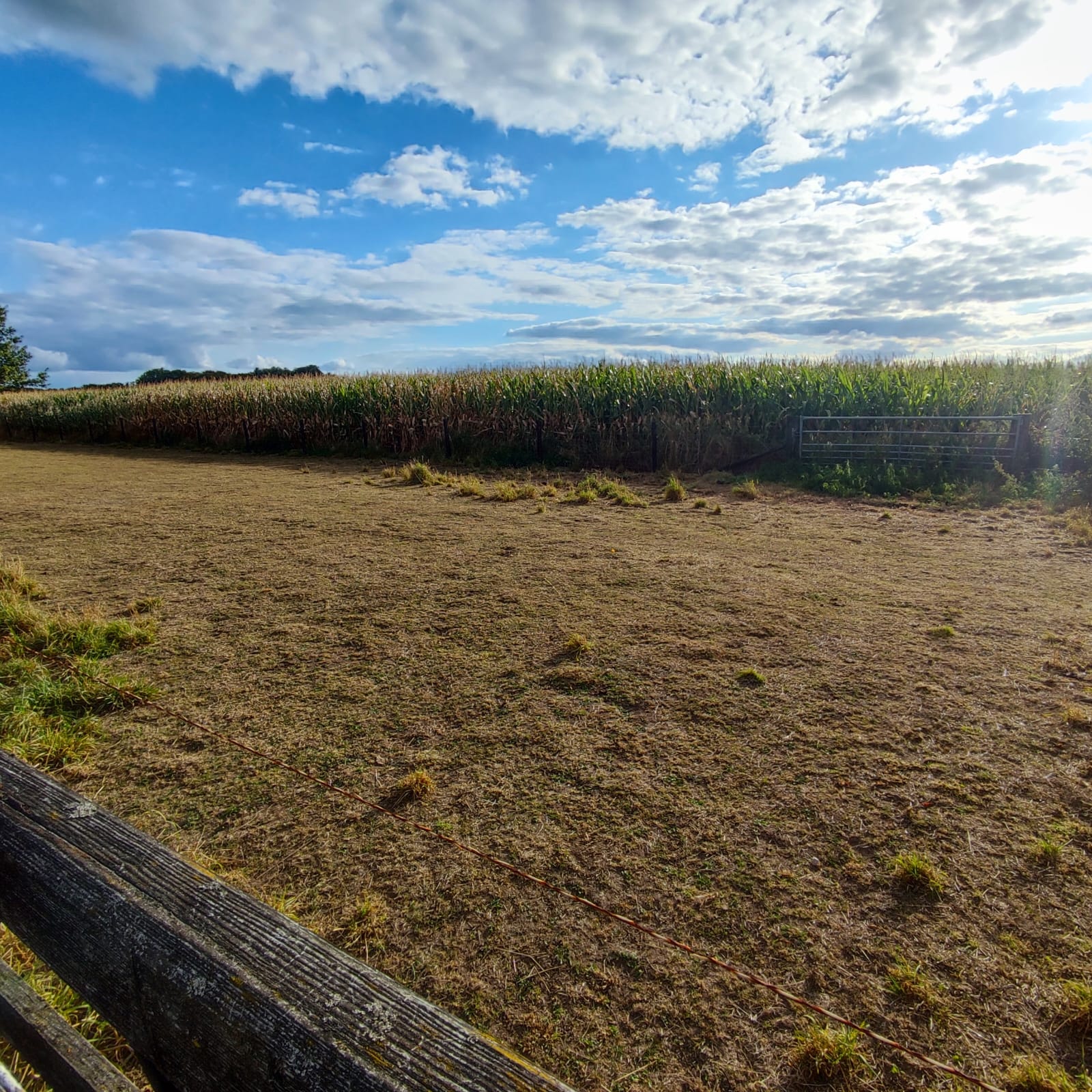
We like to let our horses run outside a lot in the pasture or, when the pasture is too wet, in a sand paddock. When there is enough food or challenge for your horse, he often entertains himself. However, providing (unlimited) food or other entertainment in a healthy way can be quite difficult, resulting in a horse becoming bored and exhibiting unwanted behavior. For example, sand eating occurs quite frequently, is difficult to unlearn and can have unpleasant and especially dangerous consequences.
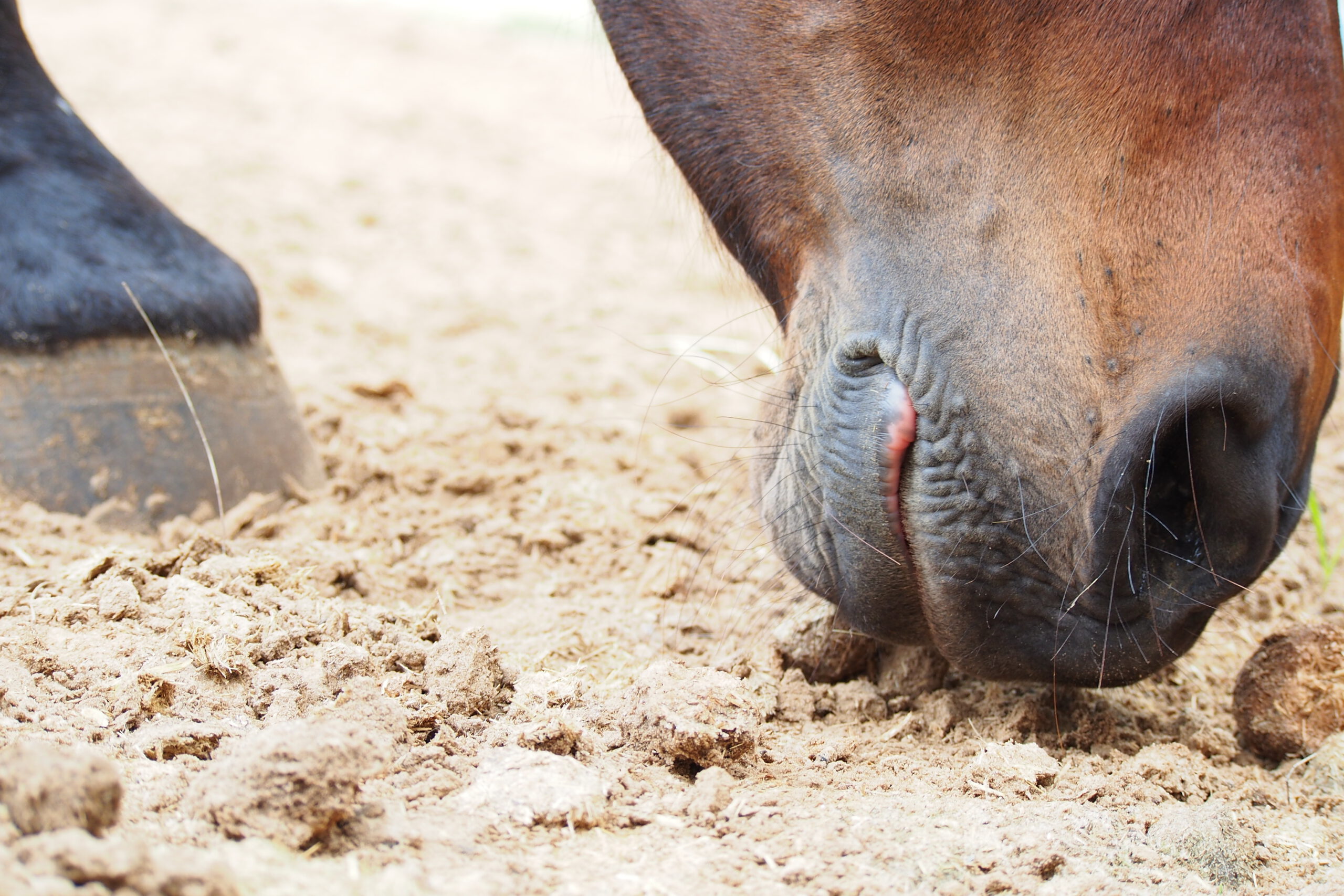
Fortunately, most ingested sand is often simply disposed of through the manure. However, sometimes the sand accumulates in the colon and causes problems there, resulting in colic. The wall of the colon can be damaged, constipation can occur and the movements of the intestinal tract are inhibited. If the latter is the case, much more sand will quickly accumulate because it is no longer being discharged. If the intestinal wall is damaged, fewer nutrients can be absorbed and the horse may lose weight.

How does your horse ingest sand?
Especially in the fall and winter, many horses are in a sand paddock or a pasture where there is little grass and what there is is often on the short side. Horses then try to eat grass, but can also ingest a lot of sand in the process. When horses in a sand paddock eat hay or haylage from the ground, it is inevitable that they will ingest sand through the hay or haylage. Some horses lick the ground. This can have several causes, such as a mineral deficiency, but also just boredom/ learned behavior or stomach ache. Sand eating is also more common in horses with stomach ulcers. Do you see your horse regularly licking the ground or even eating a bite of sand? If so, find out what the cause may be and try to fix it.
The hay or haylage itself may also contain sand. With hay this is usually not too bad, but with silage bales it can happen that it contains quite a bit of sand. This can occur when the grass is cut low to the ground and especially with less dry roughage it sticks more easily than with hay.
Good, high quality forage with structure, combined with exercise, helps to get rid of sand. Do not feed this roughage directly from the ground, but from an elevation or from a trough and clean up spilled remains which do come into contact with sand frequently. When the intake of sand is such that it accumulates in the intestine, it can cause serious problems. Sand scours the stomach' then literally works. In the horse's gastrointestinal tract, sand can cause damage that makes it harder for your horse to absorb nutrients. Eventually, the accumulated sand can lead to colic.
"Sand eating can have several causes, such as a mineral deficiency, boredom, lack of fiber or even due to an ulcer."
Mineral deficiencies
Soil contains minerals and trace elements which are essential for plants to grow. So it may be that your horse is licking the soil due to a mineral deficiency. If you suspect this, it is always wise to have the deficiency investigated. A lick or mineral bucket can also help, from which your horse can supplement its needs. Pay attention to the composition of the product, as many mineral licks contain a lot of salt, which is needed to make a block. With mineral buckets, pay attention that they are not excessively sweetened, so that the horse really only licks it when needed and not because he likes the composition. Our partner Probarn has a mineral bucket and also enriched licks in its range which you can also order from us.
Fiber deficiency
If horses don't get enough roughage, due to being in the paddock or on a bare pasture for an extended period of time, for example, horses may start to seek "filler." This is because your horse is made to eat small bits throughout the day, buffering the stomach acid that is continuously produced. When your horse's stomach becomes too empty, it may bother him and he may look for a way to buffer it. While scavenging for leaves, twigs, or other edibles that may be lying on the ground of the paddock, he may already ingest a lot of sand, but there are horses that even take targeted bites of sand to relieve the pain in the stomach.
Boredom
If your horse seems to be eating sand out of boredom, provide enrichment in the paddock. The best enrichment then is to attach a hay box/hay net in the paddock. If that is not possible, you could look at a play ball or provide a playmate and make sure your horse does not have to spend hours on the sand with an empty stomach.
"Take a simple test to see if your horse has sand in his intestines"
Recognizing sand in intestines
Now at the end of the winter season, it is useful to check your horse for sand in his intestines.
A simple way to test if your horse has sand in his intestines is to take the feces (five or six dung balls - which have not yet come into contact with sand) with a large plastic glove and add water. Gently knead the manure a tiny bit finely and let it hang overnight. It is best to do this for a few days from different dung piles, because sand does not always come out with you, so one test without sand does not necessarily mean that the horse does not have sand in its intestines. However, when sand is clearly present in the fingertips, it is wise to take action. You can also perform this test in a bucket of water; when you pour off the water after dissolving the manure, the heavier sand remains. You can only be 100% sure by having a photo taken at the vet, on this he can see the possible sand in the intestine and advise you based on that.
HorseAdds Psyllium fiber, Psyllium seed and Epsom
If you feel or confirm that your horse has sand in his intestines, give him or her a Psyllium cure. Psyllium consists of the fibers of fleawort (Plantago Ovato plant). When psyllium fibers come in contact with water, a thick slimy mass is formed. That slimy mass takes the sand with it. Therefore, the horse must absorb enough water, or the psyllium will have the opposite effect. Psyllium can be effective in the treatment of sand colic, but can also be used preventively to avoid problems caused by sand eating. It is important to give it as a course of treatment for 7-10 days and not continuously. If desired, it can be repeated after several weeks.
Research has shown that 50 to 100 grams/100 kg body weight of Psyllium for 7 to 10 days promotes intestinal cleansing. In doing so, it appears that Epsom salt, or magnesium sulfate, may enhance the action of the psyllium.