
Description
Lithothamne for Horses
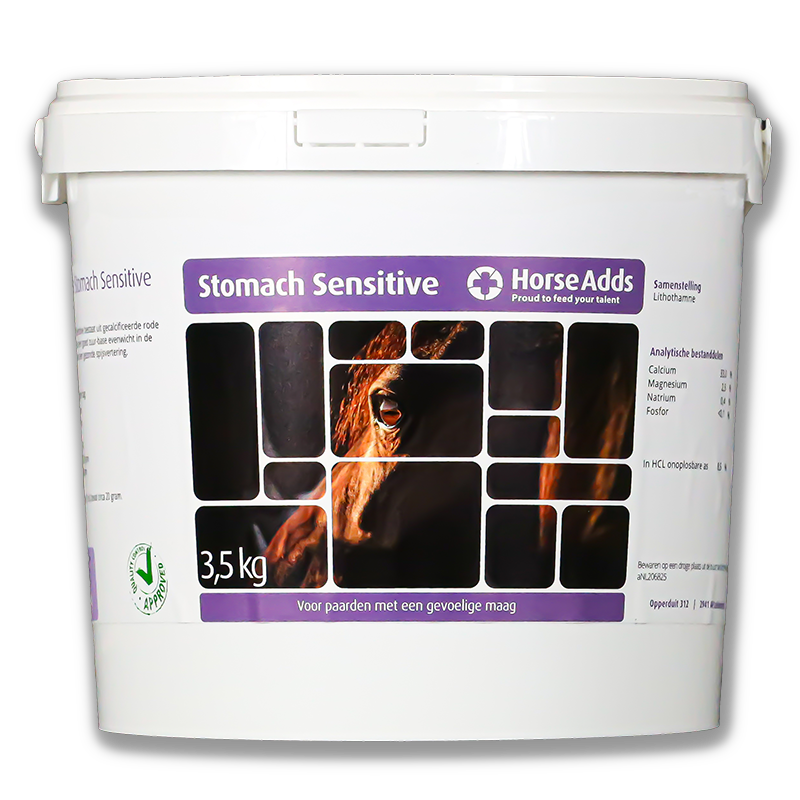
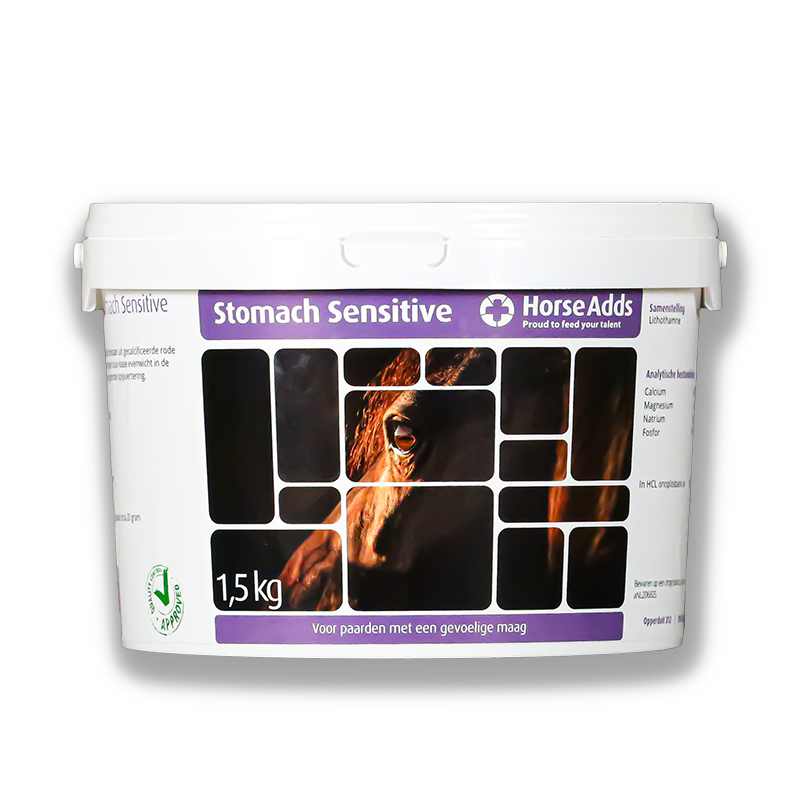
Our Lithothamne for Horses protects the stomach wall. The horse's stomach is a sensitive organ. Compared to other animals, the horse has a small stomach that acts as a sort of conduit to the intestines. In nature, the horse eats small portions throughout the day. To digest this food, stomach acid is continuously produced. Saliva and food act as a buffer against the stomach acid. Food absorbs and neutralizes stomach acid, saliva contains a lot of sodium bicarbonate and helps neutralize stomach acid. Saliva production begins when a horse chews, primarily on foods high in crude fiber (hay, haylage and straw). However, many horses are given large amounts of feed a few times a day. When this runs out, the stomach and stomach acid has no food to digest, lowering the pH in the stomach. HorseAdds Lithothamne protects the stomach wall and promotes normal acidity in the stomach.
If your horse has a sensitive stomach, you can support him by adjusting his ration.
Make sure your horse has enough roughage available, distributed throughout the day
A horse should get at least 1-1.5% of its body weight in dry matter roughage. Average forage consists of 70-90% dry matter, all the rest is water. If you have wetter forage, the dry matter content of the forage will be lower and you will need to feed more kilos to achieve the desired dry matter content.
Roughage before concentrate
When feeding, it is important to feed roughage first and then concentrate. In doing so, do not give large amounts of concentrate at a time. This is because local fermentation of starch and sugars in the stomach can lead to a too low pH in the stomach.
Offer concentrate with structure
Choose a granola instead of a pellet, or feed pellets in combination with another source of structure, such as alfalfa, for example. Both cause the horse to chew more and thus produce more saliva.
Add oil
Add a low amount of oil (45 mL) per day to your horse's ration. Feeding oil reduces stomach acid production and promotes the production of factors (prostaglandins), which increase the production of bicarbonate-rich mucus, which protects the stomach lining.
Starch and sugar content
When feeding a kibble or granola, make sure that the starch and sugar content is not too high. Starchy foods cause the production of gastrin, and this very hormone stimulates stomach acid production.
Horse Adds Lithothamne
Add HorseAdds Lithothamne daily to your ration to support proper acid-base balance in the stomach. HorseAdds Lithothamne is specially formulated for horses with sensitive stomachs. It consists of calcified red marine algae, also known as Lithothamne. Lithothamne supports the maintenance of normal gastric acidity. In addition, HorseAdds Lithothamne naturally contains many organic compounds of calcium, magnesium, sodium, zinc, copper, iodine and manganese. Highly bioavailable and each with their own nutritional benefits.