Which Magnesium for your horse? Chelate, Citrate, Sulfate or Oxide?
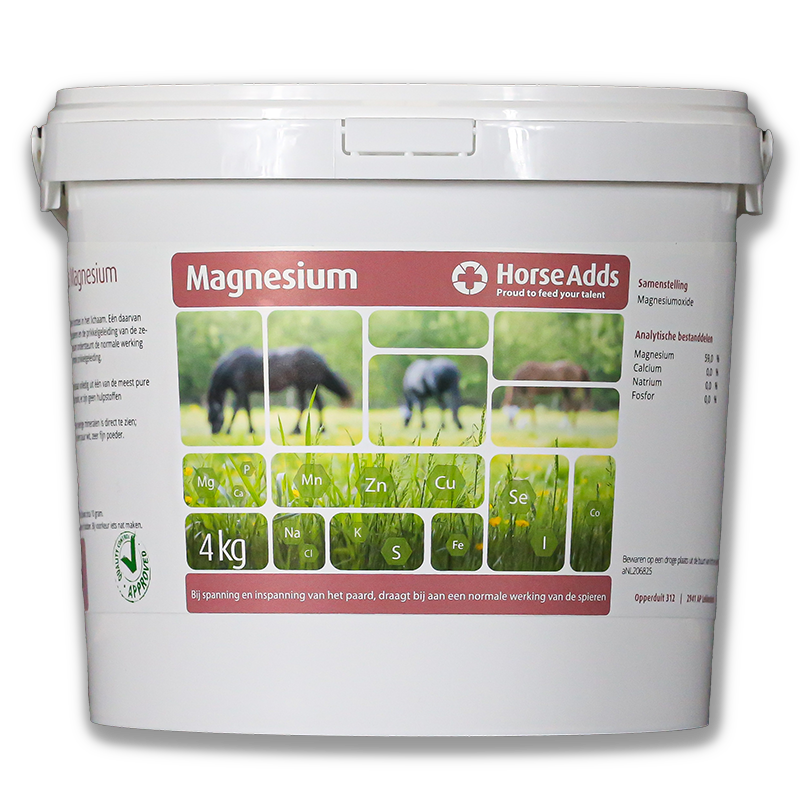
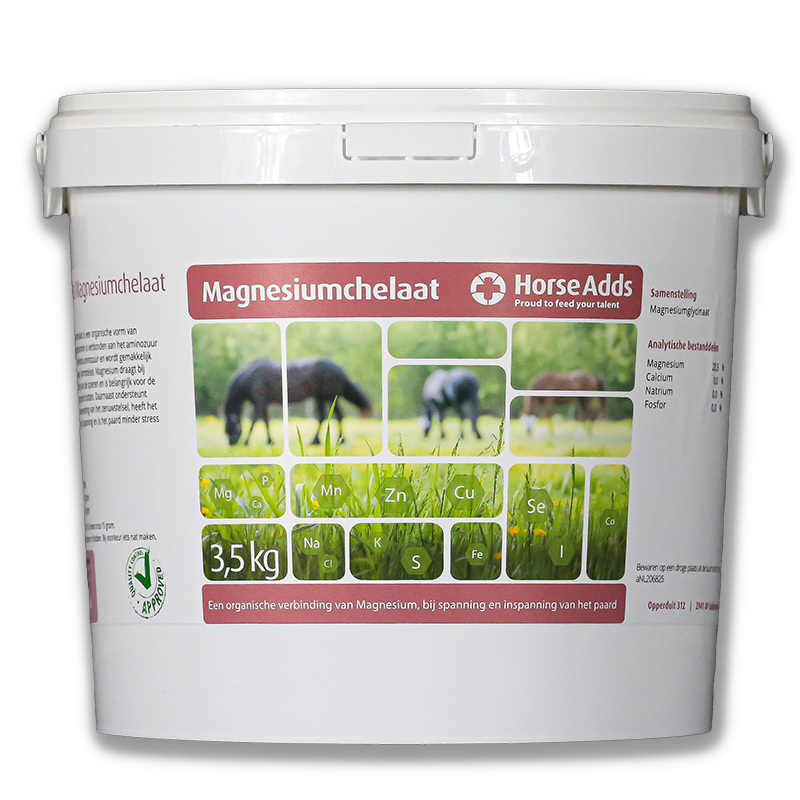
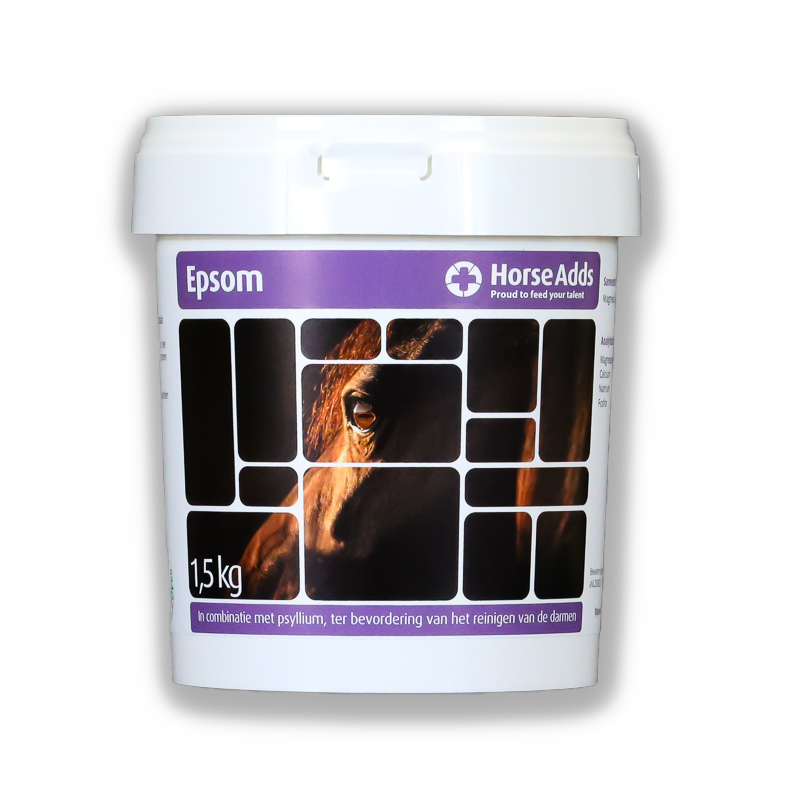
Magnesium is an important and widely used supplement for maintaining muscle function and proper nervous system function in horses. There are many types of magnesium available. At HorseAdds, we even offer four varieties. We understand that this can make choosing difficult. Of course, as a horse owner, you want the best for your horse. Choosing the right form of magnesium is important. This is because the form in which magnesium is offered affects how well it is absorbed by the body and thus how much effect it has on your horse. In this article we list the different types of magnesium and give an overview of the differences and benefits, so you can make the best choice for your horse.

What types of magnesium are there?
As with any mineral and trace element, magnesium and other essential nutrients never occur in their pure form. They are always bound to other substances, which we call compounds. We can divide these compounds into two categories:
- Inorganic magnesium sources are materials derived from non-living nature, such as rocks and sand. Consider, for example, magnesium oxide, an inorganic compound commonly found in minerals.
- Organic magnesium sources, on the other hand, are found in living nature, such as in plants and animals. An example is magnesium chelate, where the magnesium is bound to an organic molecule, in the case of magnesium chelate this is an amino acid - a building block of protein.
It is important to understand that the source or compound of minerals can affect how well it is absorbed and utilized by your horse's body. By making this distinction, you as a horse owner can make more informed choices for your horse's health and well-being. We will take a closer look at organic and inorganic magnesium.
Inorganic sources: magnesium oxide and magnesium sulfate
Inorganic magnesium comes in several forms, including magnesium oxide, magnesium chloride and magnesium sulfate. Although other compounds exist, the absorbability usually decreases the further down the list you go. An important aspect with these inorganic compounds is the fineness of the grain. The finer the grain, the better the magnesium can be absorbed by your horse's body.
However, inorganic elements, such as these magnesium compounds, have more difficulty being absorbed into the digestive system compared to organic compounds. This is because they oxidize faster, which lowers the bioavailability, or effectiveness with which the magnesium is used by the body.
There are misconceptions about the effectiveness of inorganic forms of magnesium, such as magnesium oxide. While some sources claim that these forms are barely absorbed by the body, this is simply not true. Certainly magnesium oxide has been used successfully in animal nutrition for decades and has amply proven its value on increasing the magnesium content of total rations. Several studies also prove that magnesium oxide is not necessarily inferior to organic sources of magnesium. For example, Coudray et al (2005) compared the absorbability of magnesium oxide with that of magnesium citrate. In this, the -citrate compound scored 50% bioavailability and the magnesium oxide scored 48%. This is only 2% difference in this situation, however, this can of course be very variable. Acidity for example of the stomach has a huge (negative) impact on inorganic sources and their absorbability, because at lower acidity the elements tend to oxidize faster and thus never arrive at the intestine where they should be absorbed.
However, the bioavailability of the magnesium in magnesium sulfate is so much lower that this is not the best compound to choose if you are looking to supplement elemental magnesium. This is also not what we offer it for in our web shop. However, magnesium sulfate, also called epsom salt or bittersalt, has other health benefits; for example, it does offer easily absorbable sulfur - important for keratin production and, when combined with Psyllium, it can help cleanse the gut where it enhances the action of the Psyllium. Furthermore, magnesium sulfate can also be used externally to treat flaky and/or irritated skin; always be very careful around the eyes with this type of product!
Organic sources: magnesium citrate and magnesium chelate
Organic magnesium forms such as magnesium citrate and magnesium chelate are popular, but there are important differences between the two. Magnesium citrate is bound to citric acid, while magnesium chelate is bound to an amino acid, or protein. Although both forms are less susceptible to oxidation, magnesium chelate has significantly better absorbability. This is because magnesium chelate is recognized by the body as a protein and absorbed as such in the gut. Magnesium citrate, on the other hand, must first be absorbed as a mineral, making it more vulnerable to competition with other minerals at the intestinal level such as primary Potassium and Calcium, two minerals that use the same intestinal receptors as Magnesium.
Scientific research confirms that magnesium chelate has the highest absorbability of all available magnesium sources, but this does not necessarily mean that the other sources do not work, rather that it depends on the situation which source works best for your horse.

Which Magnesium do you choose for your horse?
When choosing the right magnesium supplement for your horse, it is important to consider both bioavailability and cost. Inorganic forms such as magnesium oxide offer a high amount of elemental magnesium at a lower cost, while organic forms such as magnesium chelate offer better absorbability, but are not only more expensive but can also be lower in elemental magnesium where sometimes the donation is higher. Here are the key differences between organic and inorganic magnesium sources again, so you can quickly make the best choice for your horse:
Organic Magnesium Sources
- Source: derived from living nature, such as plants and animals.
- Compound: Magnesium is bound to organic molecules, such as amino acids (e.g., magnesium chelate).
- Absorption: More likely to become available only at intestinal level and, in the case of a chelated form, is better recognized and absorbed by the body because the body recognizes it as a protein.
- Oxidation: Less susceptible to oxidation, increasing stability and effectiveness.
- Benefits: Higher bioavailability, so often more effective, especially for horses with increased requirements or sensitive digestion.
- Cost: Generally more expensive due to higher absorbability and more complex production method.
Inorganic Magnesium Sources
- Source: derived from non-living sources, such as rocks.
- Compound: Magnesium is bound to inorganic substances such as -oxide, -chloride or -sulfate.
- Absorbency: Often less absorbable by the body, especially compared to organic compounds. The fineness of the grain plays an important role here; the finer the grain, the better the absorbability.
- Oxidation: More susceptible to oxidation, which may reduce bioavailability.
- Advantages: Usually cheaper and widely available. Suitable for general use or when budget is an important consideration.
- Disadvantages: May experience more "competition" during absorption into the digestive system, reducing effectiveness.
How do you make the best choice?
- For horses with specific needs (for example, sport horses, older horses or horses with digestive problems): Choose an organic magnesium source such as magnesium chelate or magnesium citrate because of better absorption and effectiveness.
- For general use or budget-friendly solutions: An inorganic magnesium source such as magnesium oxide may be sufficient, especially if you choose a fine-grained variety for better absorption. By considering these differences, you can make an informed choice that fits your horse's specific needs and your situation.
By considering these differences, you can make a conscious choice that fits the specific needs of your horse and your situation.
Personalized advice from our nutritional team
Still in doubt? Feel free to contact our nutritional team and we will be happy to give you personal advice! Start a WhatsApp conversation via the button at the bottom of your browser. You can also send us an email at info@horseadds.com or reach us by phone at +31 (0) 180 - 239 560.